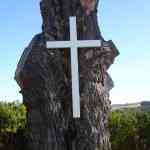
THE CROSS
“‘You can settle among us;
Genesis 34:10
Intr.:
the land is open to you.
a. Live in it,
b. trade in it, and
c. acquire property in it.'”
End:

THE CROSS
“‘You can settle among us;
Genesis 34:10
Intr.:
the land is open to you.
a. Live in it,
b. trade in it, and
c. acquire property in it.'”
End:
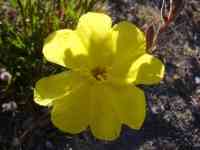
Flowers at Lake Taupo
“I MYSELF WILL HELP YOU, DECLARES THE LORD.” – Isaiah 41:14
 We are lacking something. And that is peace. Our souls are longing for peace.
In his book Licht vom unerschoepften Lichte Pastor Wilhelm Busch is writing about a German emperor who ruled when Martin Luther lived.
At the height of his reign the emperor gave everything up and entered the monastery of St. Just. Why did he do that? Everybody asked that question.
The power and the glory of this world could not give him what he was looking for. His heart was searching for peace.
Kaiser Karl V was the emperor.
Pastor Busch is also mentioning someone else.
This poet had riches, beauty and the pleasures of the world, and he was famous.
But this is what he said: He said that he was tired of everything. He asked, “What is the purpose of all the pain and pleasure?” He continued, “Sweet peace come into my heart.”
He had everything except peace.
His name was Goethe.
In John 20:19 the Lord Jesus Christ says, “PEACE BE WITH YOU!”
Did Kaiser Karl V and Goethe find the peace they were longing for? I do not know.

AT THE BEACH
Who is not trying to gain Wisdom. Who is not trying to gain Knowledge?
In Ecclesiastes 1:18 it says:
“For with much WISDOM comes much SORROW; the more KNOWLEDGE, the more GRIEF.” (NIV)
The Amplified Bible says: “For in much [human] wisdom is much vexation, and he who increases knowledge increases sorrow.”
A German translation (Hermann Menge) says:
“denn wo viel Weisheit ist, da ist auch viel Verdruss, und mit der Zunahme der Erkenntnis waechst auch der Schmerz (oder: die Enttaeuschung).”
You will agree with me that we can also say:
FOR WITH LESS WISDOM COMES LESS SORROW, THE LESS KNOWLEDGE, THE LESS GRIEF.
Gaining human wisdom and gaining knowledge means gaining sorrow, grief and vexation. (displeasure, pain, disappointment)
—————————————————————–
German words translated: Verdruss = displeasure; Schmerz = pain and Enttaeuschung = disappointment.
“Nun sind wir alle Leute geworden, deren Todesurteil schon bei der Geburt unterschrieben ist.” – Wilhelm Busch

SOJOURN MEANS A TEMPORARY STAY
“ICH BIN EIN GAST AUF ERDEN.”
Im Jahre 1628 dichtete Paul Gerhardt das Lied “Ich bin ein Gast auf Erden.”
Hier ist der erste Vers des Liedes:
“ICH BIN EIN GAST AUF ERDEN
UND HAB HIER KEINEN STAND,
DER HIMMEL SOLL MIR WERDEN,
DA IST MEIN VATERLAND.
HIER REIF’ ICH BIS ZUM GRABE,
DORT IN DER EWGEN RUH
IST GOTTES GNADENGABE,
DIE SCHLEUSST ALL ARBEIT ZU.”
Paul Gerhardt lebte von 1607 – 1676. Somit hat er das Lied mit 21 Jahren gedichet.
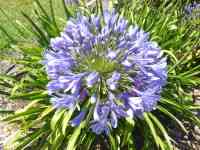
One more flower
“They answered. ‘We saw clearly that the LORD was with you.'” – Genesis 26:28
WHICH WAY?
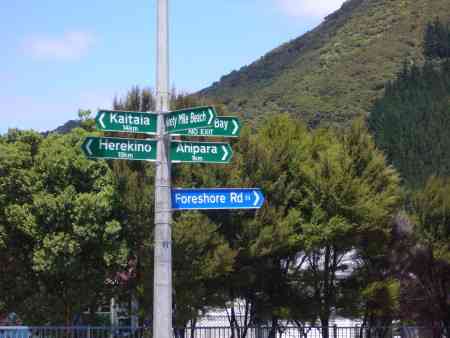
WHICH WAY?
WHICH WAY?
In the Bible, in the Gospel of John, the Lord Jesus Christ says not only that he is the way, but that he is the truth and the life.
“Jesus answered,
John 14:6
Intr.:
‘I am
a. the way and
b. the truth and
c. the life.
End:
No one comes to the Father except through me.'”

COFFEE SHOP IN AHIPARA